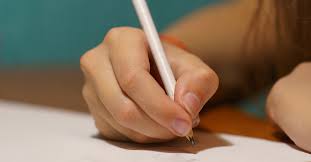
The image of a teacher pacing between desks, reciting a passage while students frantically scribble, feels like a relic of a bygone era. In the modern classroom, dictation—once a cornerstone of literacy—has often been sidelined as a “rote” or “passive” exercise, replaced by more creative or collaborative methods. However, as digital shorthand and autocorrect begin to erode our fundamental grasp of language mechanics, it is becoming clear that we may have significantly underestimated the importance of dictation. Far from being a mindless drill, dictation is a sophisticated cognitive workout that bridges the gap between hearing, processing, and producing language.
At its core, dictation is an exercise in active listening and short-term memory. Unlike “copying” text from a whiteboard, which is a visual-to-motor task, dictation requires the student to hold a string of spoken words in their mind, decode the phonetic sounds, and translate them into orthographic symbols. This process—known as “inner vocalization”—forces the brain to engage with the structure of a sentence in a way that free-writing often bypasses. When we dictate, we provide a scaffold; the student isn’t struggling to think of what to say, which allows their entire cognitive load to be dedicated to the how of the language: spelling, punctuation, and syntax.
Furthermore, dictation serves as a vital bridge between oral and written fluency. We live in an age of “text-speak” and fragmented digital communication. Dictation reintroduces students to the rhythm and flow of formal prose. By transcribing well-constructed sentences, learners internalize sophisticated grammatical structures and varied vocabulary that they might not yet be comfortable using in their own original compositions. It is, in essence, a form of apprenticeship. Just as a young painter might study by recreating the brushstrokes of a master, a student transcribing a passage from Dickens or Orwell begins to “feel” the architecture of a great sentence.
The decline of dictation has also coincided with a noticeable dip in “mechanical” accuracy. In a world of “squiggly red lines” and predictive text, the internal editor is atrophying. Dictation demands a level of precision that modern software has made us lazy about. It requires the writer to distinguish between “there,” “their,” and “they’re” based on context and sound alone, without a computer prompting the correction. By underestimating dictation, we have inadvertently weakened the link between the ear and the pen, leading to a generation of writers who can express complex ideas but often stumble over the basic mechanics that ensure those ideas are professional and clear.
Beyond the classroom, the cognitive benefits of dictation extend into the professional world. The ability to accurately transcribe information—whether it is a doctor taking notes on a patient, an assistant recording meeting minutes, or a journalist capturing a quote—remains a high-level skill. It requires intense focus, the ability to prioritize information, and the stamina to remain accurate under pressure. When we dismissed dictation as an “old-fashioned” school requirement, we lost a primary tool for building the “concentration muscles” that are increasingly rare in our distraction-heavy environment.
Critics often argue that dictation stifles creativity, but this is a false dichotomy. Creativity requires a foundation. One cannot play an improvisational jazz solo without first mastering scales; one cannot write a groundbreaking novel without a subconscious grasp of sentence boundaries and pacing. Dictation provides that foundation. It is the “weightlifting” of the literacy world—repetitive, perhaps, but essential for building the strength needed for more expressive movements.
In conclusion, it is time to reassess our dismissal of dictation. It is not a tool of conformity, but a tool of mastery. By integrating the ear, the mind, and the hand, dictation reinforces the structural integrity of language. As we move further into a digital future, the ability to process spoken language and translate it into accurate, meaningful text will only become more valuable. By bringing dictation back from the margins, we give learners the mechanical confidence they need to eventually break the rules and find their own unique voices.
https://youtu.be/3ur279nQERo?si=LLGb2bUu8HUv7l79
The challenge of sustaining student motivation is one of the most persistent hurdles in English…
The process of learning a second language is far more than a mechanical exercise in…
An online webinar via ZOOM Language: English Monday, 12 October 2026 04.00 PM GMT 08.00…
For many adult learners, the act of speaking a foreign language is not merely an…
The journey of acquiring a second language is rarely a linear path of flawless progression;…
