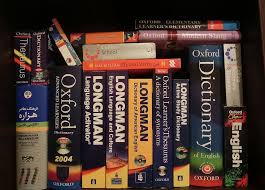
The quest for the “best” dictionary is a bit like searching for the best pair of shoes: the answer depends entirely on where you are planning to walk. For centuries, the dictionary was seen as a static monument to a language—a definitive, heavy volume that sat on a pedestal of authority. However, in the modern era, the debate has shifted from “which book is right?” to “what do I need this word to do for me?”
For those who prize tradition and historical depth, the Oxford English Dictionary (OED) remains the undisputed king. It isn’t just a list of words; it is a biography of the English language. If you want to know how a word like “nice” traveled from meaning “ignorant” in the 1300s to its current blandly positive state, the OED is your only stop. However, its greatest strength is also its practical weakness. Its sheer scale—covering over 600,000 words across a millennium—makes it an academic tool rather than a daily companion. You don’t use the OED to check a spelling while writing an email; you use it to write a thesis.
In the United States, the crown is usually held by Merriam-Webster. While the OED focuses on the lineage of the British Empire, Merriam-Webster is the champion of American English. It is famously “descriptive” rather than “prescriptive.” This means the editors believe their job is to record how people actually speak, rather than telling them how they should speak. This approach often sparks internet outrage—such as when they added a secondary definition for “literally” to mean “virtually”—but it ensures the dictionary remains a living reflection of contemporary culture.
For students and non-native speakers, however, neither of these giants may be the “best.” Learners often find more value in the Longman Dictionary of Contemporary English or Macmillan. These dictionaries prioritize clarity, using a limited “defining vocabulary” to explain complex concepts so the user doesn’t end up in a circular loop of looking up words within definitions. In this context, the “best” dictionary is the one that is most accessible.
Then there is the digital revolution. In 2024, the best dictionary for most people is the one they don’t even realize they’re using. It’s the “Define” pop-up on an iPhone, the Google search result, or Dictionary.com. These aggregators pull from various sources to provide instant gratification. While they lack the curated soul of a single editorial house, they offer speed and convenience that a 20-pound physical volume cannot match.
Ultimately, the “Eternal Question” has a shifting answer. If you are a poet looking for the perfect nuance, you need the OED. If you are a Scrabble player or an American professional, you need Merriam-Webster. If you are a slang-obsessed teenager, you might (heaven help you) find Urban Dictionary to be the only relevant source.
The best dictionary is not the one with the most words, but the one that most effectively bridges the gap between a thought and its expression. Language is a wild, evolving thing; the best tool is simply the one that helps you navigate it without getting lost.
https://youtu.be/3ur279nQERo?si=LLGb2bUu8HUv7l79
The challenge of sustaining student motivation is one of the most persistent hurdles in English…
The process of learning a second language is far more than a mechanical exercise in…
An online webinar via ZOOM Language: English Monday, 12 October 2026 04.00 PM GMT 08.00…
For many adult learners, the act of speaking a foreign language is not merely an…
The journey of acquiring a second language is rarely a linear path of flawless progression;…
