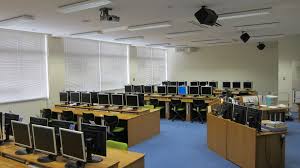
The landscape of language education has undergone a seismic shift in the 21st century. Gone are the days when learning a foreign language was confined solely to textbooks, chalkboards, and the occasional audio tape played in a specialized, dimly lit room. Today, language learning is pocket-sized, interactive, and personalized, with apps like Duolingo, Babbel, and AI-driven platforms offering instant feedback 24/7. This digital revolution has prompted a critical question: Are traditional, physical language labs still useful, or have they become obsolete relics of a bygone era? While modern technology has undoubtedly disrupted the traditional model, language labs remain remarkably useful—provided they evolve from analog hardware centers into digital-first, interactive learning hubs that blend the best of both physical and virtual worlds.
The Heyday and The Shift
To understand their current value, one must appreciate the original purpose of the language lab, which peaked in the mid-20th century. These labs were revolutionary, designed to move language learning from passive grammar translation to active listening and speaking (auditory-lingual method). They provided a dedicated space for students to listen to native-speaker recordings and record their own voices, allowing for repetitive practice without disrupting the classroom.
However, the “technology age” has brought unprecedented convenience. Modern students can access authentic content—podcasts, foreign news, movies—anytime, anywhere. Artificial Intelligence (AI) can now analyze pronunciation and provide instant, accurate feedback, a task that once required a teacher to physically walk around with a tape recorder. Furthermore, cloud-based software means a “language lab” can exist on a smartphone, eliminating the need for a physical, specialized classroom.
Why Traditional Labs Seem Obsolete
The arguments against traditional labs are compelling. Physical labs are notoriously expensive to set up and maintain, requiring specialized furniture, booths, headphones, and constant technical upgrades. Furthermore, they are bound by time and location. A student wishing to practice at 11:00 PM cannot access a school lab, whereas they can access online tools instantly. Lastly, the “one-size-fits-all” pacing of a physical lab session can frustrate advanced learners or overwhelm beginners, contrasting sharply with the adaptive learning pathways offered by AI software.
The Enduring Value of the Physical Lab
Despite these advancements, the traditional, physical language lab still holds significant value, primarily because language learning is not just about vocabulary acquisition—it is about communication, immersion, and confidence.
The “Modern” Lab: A Hybrid Solution
The key to the usefulness of the language lab lies in its evolution. The “traditional” lab of the 1970s is surely obsolete, but the “modern” digital language lab is more powerful than ever. Modern labs are no longer just audio booths; they are multimedia centers equipped with computers, high-speed internet, and advanced, cloud-based software.
These updated labs allow institutions to hybridize their approaches. Students can use the school’s robust lab infrastructure during class hours for intense, teacher-led, collaborative sessions, and then access the same, cloud-synced software on their phones at home for personalized, self-paced practice.
Conclusion
Are traditional language labs still useful in the technology age? The answer is a qualified “yes.” They are no longer the only way to learn, nor should they be. As independent study tools, they have been surpassed by mobile apps and AI. However, as dedicated, structured environments for immersive, social, and monitored language practice, they are indispensable. The language lab has not died; it has migrated. By embracing a hybrid model that combines the high-tech, flexible tools of the digital age with the structured, communicative, and collaborative atmosphere of a physical classroom, language labs remain a vital investment for developing true, confident, and functional language proficiency in the 21st century.
https://youtu.be/3ur279nQERo?si=LLGb2bUu8HUv7l79
The challenge of sustaining student motivation is one of the most persistent hurdles in English…
The process of learning a second language is far more than a mechanical exercise in…
An online webinar via ZOOM Language: English Monday, 12 October 2026 04.00 PM GMT 08.00…
For many adult learners, the act of speaking a foreign language is not merely an…
The journey of acquiring a second language is rarely a linear path of flawless progression;…
