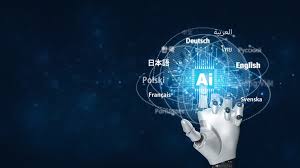
The rapid advancement of artificial intelligence and neural machine translation (NMT) has triggered widespread speculation about the future of human labor. Among the industries facing the most immediate disruption is the field of translation. With platforms like Google Translate, DeepL, and large language models generating human-like text in seconds, a critical question arises: Will machine translation demolish translation jobs? While technology will undeniably eliminate low-level, repetitive translation tasks, it will not destroy the profession. Instead, machine translation is fundamentally reshaping the industry, shifting the human role from mechanical conversion to high-level cultural curation and post-editing.
To understand why machine translation will not completely demolish human jobs, one must recognize the inherent limitations of artificial intelligence. Translation is not a mechanical process of substituting words from a source dictionary into a target language. It is an act of cultural transposition. Languages are deeply embedded in history, social norms, idioms, and emotional nuances. Current machine translation models operate on statistical probabilities and pattern recognition. They excel at literal accuracy but routinely fail at capturing subtext, irony, humor, and cultural metaphors. For instance, a legal contract, a medical document, or a marketing campaign requires an understanding of intent and context that machines simply do not possess. A misplaced word in a legal text can nullify a contract, while a tone-deaf marketing translation can ruin a brand’s reputation. In high-stakes fields, the human eye remains entirely indispensable.
Furthermore, the rise of machine translation is actually generating a massive surge in the global demand for content localization. As digital platforms allow even the smallest businesses to access a global audience, the sheer volume of content requiring translation has exploded. Human translators alone cannot keep up with this exponential growth. Machine translation acts as a force multiplier, handling the initial, bulk translation of vast databases, user reviews, and technical manuals. This creates a symbiotic relationship rather than a competitive execution. The integration of technology has birthed a rapidly growing sector within the industry: Machine Translation Post-Editing (MTPE). In this workflow, machines do the heavy lifting of translating the baseline text, and human professionals refine, polish, and ensure the emotional and cultural resonance of the final product.
Consequently, the nature of translation jobs is evolving rather than disappearing. The traditional translator, who works strictly word-by-word from scratch, is indeed facing obsolescence. However, the modern translator is transforming into a specialized localization expert, editor, and cultural consultant. Creative industries, such as literature, video game localization, and transcreation—the process of adapting a message from one language to another while maintaining its intent, style, tone, and context—are experiencing a hiring boom. Machines can translate the plot of a novel, but they cannot replicate the voice of an author or evoke the specific emotional response required in creative storytelling.
History shows that technological disruption rarely eliminates fields entirely; instead, it automates routine tasks and elevates human labor to more complex responsibilities. The invention of the automated teller machine (ATM) did not eliminate bank tellers; it shifted their duties toward relationship management and financial advising. Similarly, machine translation is liberating human linguists from the tedious, repetitive aspects of translation, allowing them to focus on the nuance and artistry of communication.
In conclusion, machine translation will not demolish translation jobs, but it will permanently demolish the traditional way translators work. The future of the industry belongs to a hybrid model where artificial intelligence handles speed and volume, while humans provide context, empathy, and cultural precision. Translators who resist technology may indeed find themselves out of work, but those who learn to collaborate with machine translation tools will find themselves more productive and essential than ever. Ultimately, language is a uniquely human phenomenon, and as long as human connection requires nuance, the human translator will remain irreplaceable.
https://youtu.be/3ur279nQERo?si=LLGb2bUu8HUv7l79
The challenge of sustaining student motivation is one of the most persistent hurdles in English…
The process of learning a second language is far more than a mechanical exercise in…
An online webinar via ZOOM Language: English Monday, 12 October 2026 04.00 PM GMT 08.00…
For many adult learners, the act of speaking a foreign language is not merely an…
The journey of acquiring a second language is rarely a linear path of flawless progression;…
