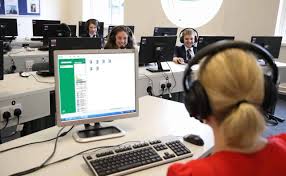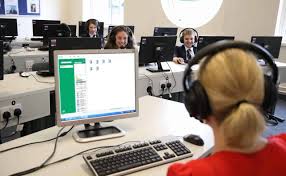
The landscape of linguistic education has undergone a seismic shift, moving from the dusty reels of tape recorders to the fluid, omnipresent world of artificial intelligence and cloud computing. The modern language laboratory is no longer a physical room with partitioned desks; it is a borderless, digital ecosystem. The influence of new technology on language labs has fundamentally redefined how we acquire, practice, and master human communication.
The Death of the “Booth”: From Analog to Ubiquitous
For decades, the language lab was defined by its hardware. Students sat in isolated booths, wearing heavy headsets, repeating phrases from a master tape in a method known as “audio-lingualism.” This was a linear, passive experience. Today, technology has decoupled the “lab” from the “room.”
Cloud-based platforms have turned every smartphone and laptop into a sophisticated language laboratory. This shift has democratized access. A student in a rural area can now access the same high-fidelity phonetic analysis and native-speaker recordings as a student at a top-tier university. The primary influence here is ubiquity; learning is no longer a scheduled event, but a continuous, on-demand integration into daily life.
Artificial Intelligence and the Feedback Loop
Perhaps the most transformative influence is the evolution of feedback. In the analog era, a student could mispronounce a word for an hour, and unless the instructor was plugged into their specific channel at that exact moment, the error went uncorrected.
New technologies, specifically Automatic Speech Recognition (ASR) and Natural Language Processing (NLP), have solved this “feedback gap.” Modern lab software provides real-time, granular analysis of phonemes. If a Spanish learner struggles with the “rr” sound, the software doesn’t just mark it wrong; it visualizes the sound wave compared to a native speaker’s, offering immediate, non-judgmental correction. This creates a “safe space” for failure, which is psychologically critical for language acquisition.
Gamification and Cognitive Engagement
The traditional lab was often criticized for being tedious—a “drill and kill” environment. New technology has introduced gamification, leveraging dopamine hits to maintain student engagement. By incorporating leaderboards, digital badges, and interactive storytelling, technology addresses the greatest hurdle in language learning: attrition.
When a lab session feels like a role-playing game where the player must negotiate a transaction in a Parisian café to “level up,” the brain moves from rote memorization to active problem-solving. This contextual learning ensures that vocabulary moves from short-term “working memory” to long-term “functional fluency.”
Immersion via VR and AR
Virtual Reality (VR) and Augmented Reality (AR) represent the frontier of the modern language lab. One of the hardest things to replicate in a classroom is the cultural and situational context of a language.
With VR, a student can virtually walk through the streets of Tokyo, reading signs and interacting with AI-driven avatars. This “situational immersion” reduces the anxiety of real-world interaction (known as the Affective Filter). By the time the student actually visits Japan, their brain has already mapped the spatial and social cues associated with the language, making the transition from the lab to the world nearly seamless.
Data-Driven Personalization
Finally, new technology has introduced Learning Management Systems (LMS) that utilize Big Data. In an old-school lab, every student moved at the same pace. Today, “Adaptive Learning” algorithms track a student’s specific weaknesses. If a student consistently misses the subjunctive mood in French, the lab environment automatically reshapes future lessons to reinforce that specific gap. This “hyper-personalization” ensures that no time is wasted on concepts already mastered, maximizing the efficiency of every study hour.
Conclusion
The influence of new technology has transformed the language lab from a static repository of sound into an intelligent, adaptive, and immersive partner in the learning process. By breaking down the walls of the classroom and providing instant, AI-driven feedback, technology has made the dream of global fluency more attainable than ever before. We are moving toward a future where the “lab” is not a place you go, but a digital layer over your world that constantly invites you to speak, listen, and understand.
https://youtu.be/3ur279nQERo?si=LLGb2bUu8HUv7l79
The challenge of sustaining student motivation is one of the most persistent hurdles in English…
The process of learning a second language is far more than a mechanical exercise in…
An online webinar via ZOOM Language: English Monday, 12 October 2026 04.00 PM GMT 08.00…
For many adult learners, the act of speaking a foreign language is not merely an…
The journey of acquiring a second language is rarely a linear path of flawless progression;…