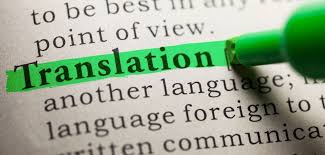
The art of translation is as old as civilization itself, serving as the bridge between disparate cultures, the lubricant of global trade, and the keeper of diplomatic peace. Yet, as we stand on the precipice of the 2030s, the profession faces an existential crossroads. The rapid evolution of Neural Machine Translation (NMT) and the emergence of Large Language Models (LLMs) like GPT-4 have sparked a heated debate: Can human language translators survive the next decade, or are they destined to become relics of a pre-algorithmic age?
To answer this, one must look beyond the binary of “man versus machine.” The survival of the translator depends not on competing with speed, but on mastering the nuances that silicon cannot yet replicate.
The Rise of the Algorithmic Linguist
For decades, machine translation was the subject of mockery. Early rule-based systems produced “word salad,” failing to account for syntax or context. However, the shift to neural networks around 2016 changed everything. By training on vast corpora of human-generated text, AI began to understand patterns rather than just rules.
Today, the efficiency of AI is undeniable. For technical manuals, legal boilerplate, and real-time travel assistance, machines are not just “good enough”—they are superior in terms of cost and speed. In a world that generates quintillions of bytes of data daily, human translators simply cannot scale. This reality has already cannibalized the “low-end” of the market. The survival of the entry-level translator, who focuses on literal, repetitive text, is indeed in jeopardy.
The Barrier of Context and Culture
While AI excels at syntax, it struggles with “semiotics”—the study of signs and symbols and how they create meaning. Language is not just a code to be cracked; it is a living, breathing reflection of culture.
Consider the concept of untranslatability. A word like the Portuguese saudade or the Japanese komorebi carries a weight of history and emotion that a dictionary definition cannot capture. A human translator does not just swap words; they perform a cultural “transposition.” They understand the political climate of the target audience, the historical baggage of certain idioms, and the subtle power dynamics inherent in address (such as the “tu” vs. “vous” distinction in French).
In the next decade, this “cultural consulting” will be the translator’s primary value proposition. Machines can predict the next word in a sequence, but they cannot feel the weight of a metaphor. For high-stakes literature, marketing campaigns, and sensitive diplomatic negotiations, the human element remains the final safeguard against tone-deafness.
The “Centaur” Model: Adaptation as Survival
The narrative of replacement is increasingly being replaced by one of augmentation. The translators most likely to survive the next ten years are those who embrace the “Centaur” model—the hybridization of human intuition and machine efficiency.
Professional translation is shifting toward Post-Editing Machine Translation (PEMT). In this workflow, the AI handles the heavy lifting of initial drafting, while the human expert focuses on nuance, flow, and accuracy. This allows translators to handle higher volumes of work without sacrificing quality. Instead of being replaced, the translator is evolving into an editor-in-chief of AI outputs.
However, this shift brings a new challenge: the “race to the bottom” regarding rates. As machines do more, clients may be less willing to pay premium prices. Survival will require translators to pivot from being “service providers” to “strategic partners,” offering expertise in niche fields like medical law, creative copywriting, (transcreation), or localization for gaming.
The Ethical and Legal Fortress
As AI-generated content floods the internet, issues of intellectual property and liability become paramount. Who is responsible if a machine-translated medical dosage leads to a fatality? Who owns the copyright to a poem translated by an algorithm trained on stolen human labor?
These legal gray areas provide a protective shell for human professionals. Corporations and government bodies require accountability. A certified human translator provides a “paper trail” of responsibility that an algorithm cannot. Over the next decade, the demand for verified human translation in regulated industries—defense, healthcare, and finance—is likely to remain steady, if not increase, as a countermeasure to the “hallucinations” common in AI.
The Paradox of Choice
Ironically, the ubiquity of machine translation might actually increase the value of human translation. As AI makes basic communication “free,” high-quality, human-crafted prose becomes a luxury good—a mark of prestige and authenticity. In branding, where the goal is to forge an emotional connection with a customer, the “uncanny valley” of AI-generated text can be a liability. Brands that want to stand out will pay for the “human touch” to ensure their voice doesn’t sound like every other algorithmic output.
Conclusion: Survival Through Evolution
The next decade will undoubtedly be the most volatile in the history of linguistics. Many generalist translators will find their livelihoods squeezed by increasingly competent software. However, to say the profession will vanish is to misunderstand what language actually is.
Language is the primary tool for human connection. As long as humans have a need to be truly understood—not just decoded—there will be a role for the translator. The survivors will be those who stop viewing themselves as bilingual dictionaries and start seeing themselves as cross-cultural architects. They will use AI to handle the mundane, freeing their minds to solve the complex puzzles of human expression that no machine, no matter how many parameters it has, can ever truly feel.
The translator is not dying; the translator is being redefined.
https://youtu.be/3ur279nQERo?si=LLGb2bUu8HUv7l79
The challenge of sustaining student motivation is one of the most persistent hurdles in English…
The process of learning a second language is far more than a mechanical exercise in…
An online webinar via ZOOM Language: English Monday, 12 October 2026 04.00 PM GMT 08.00…
For many adult learners, the act of speaking a foreign language is not merely an…
The journey of acquiring a second language is rarely a linear path of flawless progression;…