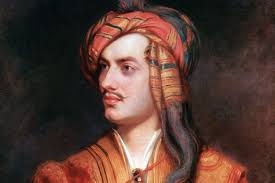
The question of which work constitutes George Gordon Byron’s “masterpiece” usually sparks a debate between two titans of Romantic literature: the brooding, semi-autobiographical Childe Harold’s Pilgrimage and the sharp, satirical epic Don Juan. While Childe Harold invented the “Byronic Hero” and made him an overnight celebrity, it is Don Juan—his sprawling, unfinished “epic-satire”—that stands as his true masterpiece. It is the fullest expression of his intellect, his wit, and his complicated relationship with the world.
The Genesis of a Rebel
By the time Byron began writing Don Juan in 1818, he was a man in exile. Hounded out of England by scandals involving his failed marriage and rumors of incest, he had settled in Italy. This distance from the “cant” (hypocrisy) of British society gave him a unique vantage point. He was no longer the melancholy youth of Childe Harold; he was a seasoned, cynical, yet deeply feeling observer of the human comedy.
In Don Juan, Byron took the legendary Spanish libertine and flipped the script. In traditional folklore, Don Juan is a cold-blooded predator. In Byron’s hands, Juan is an innocent—a handsome, somewhat passive young man to whom things simply happen. This shift allowed Byron to focus less on the mechanics of seduction and more on the absurdity of the world Juan travels through.
The Power of Ottava Rima
The brilliance of Don Juan lies in its technical execution, specifically Byron’s mastery of ottava rima. This eight-line stanza (rhyming ABABABCC) became the perfect vehicle for his “conversational” style. The first six lines build a narrative or a serious philosophical point, only for the final couplet to swoop in with a devastating joke, a pun, or a sudden shift in tone.
For example, he might spend several stanzas reflecting on the fleeting nature of love, only to end with a comment on how sea-sickness is the only thing that can truly kill a romantic mood. This technique, known as bathos, allowed Byron to undermine pretension whenever it cropped up. It mirrored his own personality: a mixture of high-minded idealism and earthy realism.
A Tour of Human Folly
Don Juan is a picaresque journey that spans continents. Through Juan’s adventures, Byron deconstructs the pillars of 19th-century civilization:
The “Byronic” Paradox
What makes Don Juan a masterpiece is its honesty. Byron famously wrote, “If I laugh at any mortal thing, ’tis that I may not weep.” The poem is a defense mechanism against the tragedies of life. It encapsulates the “Byronic Hero” not as a static, moody figure in a cape, but as a living, breathing consciousness trying to make sense of a world that is simultaneously beautiful and broken.
He attacks “cant” in all its forms—political, religious, and literary. He mocks his contemporaries (Southey, Coleridge, and Wordsworth) for what he saw as their intellectual surrender to the establishment. In doing so, he created a work that feels startlingly modern. The voice in Don Juan is not the voice of a distant Victorian statue; it is the voice of a man talking to you over a glass of wine, sharing the world’s most cynical and hilarious secrets.
Legacy
Byron died in Greece at the age of 36, leaving Don Juan unfinished at sixteen cantos and a fragment of a seventeenth. Despite its incomplete state, its influence is immeasurable. It paved the way for the conversational realism of the 20th century and established the idea that a “serious” poem could also be a comedy.
While Childe Harold gave the world a new type of hero, Don Juan gave the world a new type of truth. It remains Byron’s masterpiece because it is the most complete map of his mind: a restless, brilliant, and utterly defiant landscape.
https://youtu.be/3ur279nQERo?si=LLGb2bUu8HUv7l79
The challenge of sustaining student motivation is one of the most persistent hurdles in English…
The process of learning a second language is far more than a mechanical exercise in…
An online webinar via ZOOM Language: English Monday, 12 October 2026 04.00 PM GMT 08.00…
For many adult learners, the act of speaking a foreign language is not merely an…
The journey of acquiring a second language is rarely a linear path of flawless progression;…