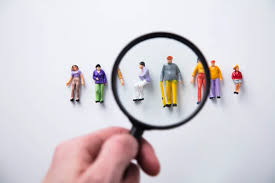
Meaning is rarely a solo performance; it is a collaborative script written by the society we inhabit. While we often like to think of our interpretations of the world—what is “good,” what is “rude,” or what is “successful”—as products of our own logic, they are fundamentally anchored in social norms. These unwritten rules and shared expectations act as the invisible lens through which we process reality. Social norms don’t just regulate behavior; they provide the cognitive framework that allows us to assign value and significance to actions, objects, and identities.
The Architecture of Shared Understanding
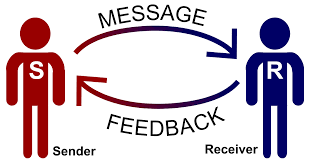
At its core, a social norm is a collective agreement about what is typical or appropriate. However, their true power lies in their ability to create semiotic consistency. For language or gestures to have meaning, there must be a normative baseline. Consider a simple nod of the head. In most Western cultures, this signifies “yes.” This meaning is not inherent to the physical movement; it is a social norm that dictates how the movement should be interpreted. If you are in parts of Bulgaria or Greece, that same physical act might mean “no.” Here, the norm is the “dictionary” that translates a raw physical data point into a meaningful piece of information. Without the norm, the action is just a muscle spasm; with the norm, it is a communication.
Contextual Fluidity and Meaning
Social norms also define the boundaries of context, which is the primary driver of meaning. An action that is perceived as “heroic” in one setting can be “criminal” in another, depending on the governing norms. For example, breaking into a locked building is generally defined as “burglary.” However, if a social norm exists that prioritizes “life-saving” over “property rights”—such as in the case of a fire—the meaning of the break-in shifts to “rescue.”
The norm acts as a filter. It tells us which aspects of a situation to focus on and which to ignore. This is clearly seen in ritualistic behavior. A wedding ring is, chemically speaking, just a band of metal. Yet, through centuries of social norms, it has been imbued with the meaning of “eternal commitment.” The norm creates a “sacred” space around the object, transforming its ontological status from a commodity to a symbol.
Norms as Evaluative Tools
Beyond just defining what things are, social norms dictate what things mean in terms of value. This is most evident in our concepts of status and success. In a capitalist society, the norm often dictates that high consumption and professional titles are the primary markers of a “meaningful life.” Consequently, an individual’s self-worth is often filtered through these normative expectations.
If the social norm shifts—as seen in some “minimalist” subcultures—the meaning of a large house shifts from “success” to “burden” or “excess.” In this sense, norms function as a moral and aesthetic compass. They tell us what is “beautiful,” “ugly,” “honorable,” or “shameful.” When we deviate from these norms, the “meaning” of our deviation is defined by the community; it might be labeled as “bravery” if the norm is seen as oppressive, or “deviancy” if the norm is seen as foundational to safety.
The Power of the “Default”
One of the most profound ways norms influence meaning is by creating a “default” reality. Norms often hide in plain sight because they are so pervasive that they feel like “common sense.” This is what sociologists call “naturalization.” For instance, gender norms have historically dictated that certain behaviors are “naturally” masculine or feminine. When a person performs a task that aligns with these norms, the meaning is often invisible—it’s just “the way things are.” Meaning only becomes hyper-visible when a norm is violated.
When someone breaks a norm, they force a “re-meaning” of the situation. A man wearing a dress in a traditional office setting is not just wearing clothes; because he is violating a norm, his attire is assigned a specific political or social meaning. The norm, even in its breach, remains the primary point of reference for how the world understands the individual.
Conclusion
Social norms are the “operating system” of human interaction. They provide the scripts that allow us to navigate a complex world without having to renegotiate the meaning of every interaction from scratch. By defining the boundaries of the acceptable, the valuable, and the typical, social norms construct the very reality we inhabit. We do not see the world as it is; we see the world as our norms have taught us to read it. Understanding this influence is crucial, as it allows us to see that meaning is not a fixed, objective truth, but a living, breathing product of our collective lives.