

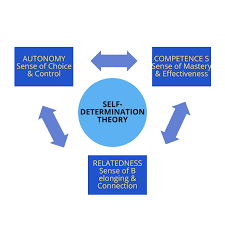
The challenge of sustaining student motivation is one of the most persistent hurdles in English as a Second Language (ESL) education. While many learners enter

The process of learning a second language is far more than a mechanical exercise in memorizing vocabulary and mastering syntactic structures. Language is the primary

An online webinar via ZOOM Language: English Monday, 12 October 2026 04.00 PM GMT 08.00 PM Oman time 07.00 PM KSA Time Presenter: Prof. Ali

For many adult learners, the act of speaking a foreign language is not merely an intellectual challenge; it is a profound emotional hurdle. While reading
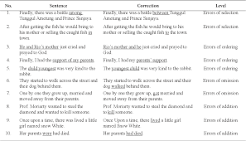
The journey of acquiring a second language is rarely a linear path of flawless progression; rather, it is a complex terrain marked by continuous trial,

The intersection of traditional academic curricula and contemporary media presents a profound opportunity for modern educators. For generations, English literature instruction has relied heavily on

In traditional English as a Second Language (ESL) classrooms, the dominant pedagogical paradigm has long focused on the mechanical mastery of language structures. Students spent

The traditional classroom has long been defined by the sound of a single, authoritative voice. For decades, the metric of a good teacher was often

Who we SERVE? ELT Digest is for you: the teacher, the educator, the student, the learner, the lab technician, the writers, IT specialists, and others.