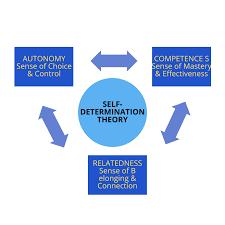
The challenge of sustaining student motivation is one of the most persistent hurdles in English as a Second Language (ESL) education. While many learners enter the classroom with an initial desire to learn English, this enthusiasm often wanes when confronted with complex grammar rules, pronunciation difficulties, and the cognitive fatigue of processing a new language. Traditional educational systems frequently rely on extrinsic motivators—such as grades, standardized test scores, or parental pressure—to drive student effort. However, empirical research in educational psychology demonstrates that external pressure rarely translates into lifelong language proficiency. To foster deep, sustained engagement, educators are increasingly turning to Self-Determination Theory (SDT). By deliberately restructuring the ESL classroom to satisfy the three core psychological needs of autonomy, competence, and relatedness, educators can transform passive learners into self-driven, intrinsically motivated individuals who take active ownership of their linguistic journey.
Developed by psychologists Edward L. Deci and Richard M. Ryan, Self-Determination Theory posits that human beings possess an inherent tendency toward growth and optimal functioning. According to SDT, individuals are not merely reactive to external rewards or punishments; rather, they are driven by internal psychological needs. When these needs are met, individuals exhibit high levels of intrinsic motivation—the desire to engage in an activity simply because it is inherently interesting, enjoyable, or personally meaningful. In the context of ESL acquisition, intrinsic motivation is the holy grail. Language learning is a long-term endeavor that requires thousands of hours of practice. Extrinsic rewards may compel a student to memorize vocabulary for a Friday quiz, but only intrinsic motivation will drive them to read English books, watch foreign media, and seek out conversational partners outside the school walls.
The first psychological need identified by SDT is autonomy, which refers to the desire to be the author of one’s own life and actions. In a traditional teacher-centered classroom, ESL students often experience a low sense of autonomy, as the teacher dictates every reading passage, writing prompt, and conversational topic. To cultivate autonomy, educators must shift toward a student-centered approach by offering meaningful choices. This does not mean abandoning the curriculum, but rather providing options within structural boundaries. For instance, instead of assigning a uniform essay topic, a teacher can allow students to choose their own research subject, select between writing a formal essay or delivering a persuasive speech, or choose their own reading materials from a curated library. When ESL learners have a say in their education, they no longer perceive language learning as an externally imposed obligation, but as a self-directed pursuit aligned with their personal interests.
The second core need is competence, defined as the feeling of effectiveness and growth in interacting with one’s environment. Language acquisition is inherently fraught with moments of vulnerability and perceived failure, which can easily shatter a student’s sense of competence. If tasks are too difficult, learners experience anxiety and helplessness; if they are too easy, they become bored. To support competence, ESL educators must design tasks that fall within Lev Vygotsky’s Zone of Proximal Development—offering optimal challenges paired with structured scaffolding. Furthermore, feedback must shift from evaluative grading to constructive, formative guidance. By celebrating incremental progress and teaching students to view mistakes as natural milestones of data-gathering rather than signs of deficiency, teachers help students build a robust sense of self-efficacy. When an ESL learner recognizes their own growing ability to communicate, their intrinsic drive to tackle more complex linguistic structures is profoundly amplified.
The final pillar of SDT is relatedness, the universal need to feel connected to, secure with, and cared for by others. For ESL students, who are operating in a language that is not their own, the classroom can be an intimidating, alienating environment. If a student fears judgment from their peers or disconnect from their instructor, their affective filter rises, blocking learning entirely. Cultivating relatedness requires building a collaborative, empathetic classroom culture. Group work, peer-review sessions, and collaborative storytelling games allow students to form bonds and practice communication in a low-stakes environment. Moreover, when teachers show authentic interest in their students’ native cultures and personal backgrounds, they validate the learners’ identities. This inclusive environment reassures students that they belong to a community of practice, making them far more willing to take the communicative risks necessary for fluency.
Ultimately, applying Self-Determination Theory to the ESL classroom redefines the role of the educator. The teacher shifts from a distributor of external rewards and punishments to a facilitator of psychological growth. By systematically nurturing autonomy, competence, and relatedness, educators dismantle the barriers of language anxiety and disengagement. When ESL students are driven from within, the English language ceases to be a sterile academic subject to be memorized for an exam. Instead, it becomes a vibrant, self-chosen vehicle for personal expression, global connection, and lifelong empowerment.
- Allow post comments