The Digital Rosetta Stone: Will Language Textbooks Become Extinct?
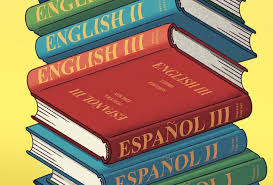
For centuries, the language textbook has been the undisputed monarch of the classroom. From the rigid, grammar-translation manuals of the Victorian era to the colorful, task-based volumes of the early 2000s, these bound stacks of paper have served as the primary bridge between a student’s native tongue and their target language. However, as we navigate the third decade of the 21st century, the landscape of education is shifting. With the rise of AI-powered tutors, immersive virtual reality, and gamified apps like Duolingo, a provocative question has emerged: Are we witnessing the final chapter of the printed language textbook?
While the traditional textbook is certainly undergoing a metamorphosis, its total “extinction” is unlikely. Instead, we are seeing a transition from the textbook as a standalone product to a component of a broader, hybrid ecosystem. To understand this evolution, we must examine the pressures of the digital age, the enduring pedagogical value of structured physical media, and the socio-economic factors that keep print alive.
The Digital Onslaught: Why Textbooks Look Vulnerable
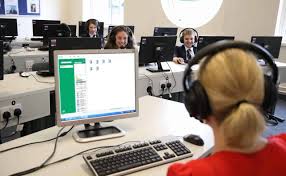
The case for the textbook’s demise is rooted in the sheer efficiency and adaptability of digital tools. In the realm of language acquisition, the greatest weakness of a printed book is its silence. A textbook can describe the phonetics of a French “r” or the tonal shifts in Mandarin, but it cannot listen, correct, or respond.
Modern learners have shifted toward dynamic interactivity. Adaptive learning algorithms, used by platforms like Babbel or Memrise, can identify exactly which verb conjugations a student struggles with and adjust the curriculum in real-time. This “spaced repetition” is mathematically optimized to move information from short-term to long-term memory—a feat a static book simply cannot achieve.
Furthermore, the immediacy of culture has rendered many textbooks obsolete before they even hit the shelves. Language is a living organism; slang, social norms, and political contexts change monthly. A digital platform can update its content instantly to include a trending phrase or a news clip from Madrid. A textbook, by contrast, is a time capsule, often teaching students how to ask for a “traveler’s check” or navigate a “cyber cafe”—relics of a world that no longer exists.
The Case for Survival: Structure and Cognitive Focus
Despite these digital advantages, the textbook possesses “survival traits” that apps have yet to replicate effectively. The first is curated authority. The internet is a chaotic sea of information. While you can find thousands of YouTube videos on German cases, a textbook provides a vetted, linear path designed by experts. For many learners, the “infinite choice” of the internet leads to paralysis. The textbook offers a “closed system,” which provides a psychological sense of progress and completion that an endless app streak does not.
There is also the matter of cognitive engagement. Neuroscientific research suggests that “deep reading” from physical pages facilitates better retention than scanning screens. Digital environments are designed for distraction, often punctuated by notifications or the temptation to switch tabs. A student sitting with a physical book often enters a different cognitive state—one of focused, linear processing. This “slow learning” is arguably essential for mastering complex grammatical structures that require deep contemplation rather than quick-fire clicking.
Furthermore, textbooks serve as a common denominator in institutional settings. For a teacher managing thirty students, a common textbook provides a standardized framework for assessment and a “shared map” for the semester. It ensures that every student, regardless of their technological literacy or the quality of their home Wi-Fi, has access to the same core material.
The Socio-Economic Divide
The “extinction” of the textbook is also a luxury conversation. In many parts of the developing world, the digital revolution is hampered by the “digital divide.” In regions where electricity is intermittent or high-speed internet is a high-cost commodity, the physical book remains the most durable and reliable technology available. It requires no battery, no subscription, and can be passed down through generations. Until global infrastructure catches up with educational ambitions, the textbook remains an essential tool for democratizing education.
The Rise of the “Living Textbook”
Rather than disappearing, the textbook is evolving into what we might call the “hybrid” or “augmented” text. We are already seeing the emergence of books with embedded QR codes that instantly trigger audio clips or AR (Augmented Reality) experiences. In this model, the book provides the structural skeleton—the grammar explanations and cultural essays—while the digital component provides the “meat”—the listening exercises and interactive drills.
The future likely holds a bifurcation of the market. For casual “tourist learners,” the textbook is already effectively extinct, replaced by translation apps and gamified modules. However, for the “serious learner”—the university student, the diplomat, or the deep enthusiast—the textbook will remain a prestigious and necessary anchor. It will be seen less as a chore and more as a curated reference work, akin to a high-quality vinyl record in an age of Spotify: a tactile, intentional, and authoritative medium.
Conclusion
Will language textbooks become extinct? If we define a textbook as a 500-page block of paper containing every single exercise and audio transcript, then yes, that specific format is likely headed for the museum. The “all-in-one” paper solution is too slow and too quiet for the modern world.
However, if we define the textbook as a structured, expert-led curriculum, it is merely shedding its old skin. The language textbook of 2050 will likely be a sleek, interactive interface—perhaps a mix of a digital tablet and a slim, high-quality physical workbook. It will remain because humans still crave structure, because the brain still benefits from tactile focus, and because language is too complex to be learned solely through five-minute sessions on a smartphone. The textbook isn’t dying; it’s finally finding its voice.