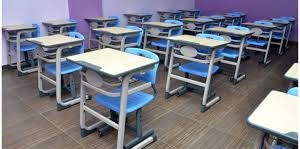
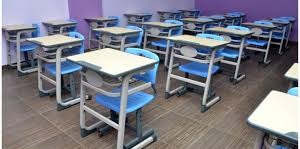
 The traditional classroom, with its rows of desks and flickering fluorescent lights, is becoming a relic. As we move deeper into the 21st century, the way we acquire new languages is undergoing a metamorphosis driven by artificial intelligence, neuroplasticity research, and a globalized economy that demands more than just basic fluency. The language school of the future will not be a physical destination one visits twice a week, but a pervasive, hyper-personalized ecosystem that blends into the fabric of daily life.
The Death of the “One-Size-Fits-All” Curriculum
Historically, language schools have relied on standardized textbooks. Whether you were a surgeon, a software engineer, or a tourist, you started with “Hello, my name is…” and progressed through the same arbitrary list of irregular verbs. The future language school replaces this linear model with Dynamic Personalized Pathing.
Using AI-driven diagnostics, schools will map a student’s “Linguistic DNA.” This involves analyzing not just what a student knows, but how they learn. Some learners possess high auditory retention, while others are visual-spatial. Future platforms will adjust their delivery in real-time. If a student struggles with the subjunctive mood while reading but excels during verbal interaction, the system will pivot to a conversation-heavy module to solidify the concept.
Furthermore, content will be niche-specific from day one. A “Business English” course will no longer be a generic overview; it will be tailored to the specific industry of the learner. An architect will learn Japanese through the lens of structural design and urban planning, ensuring that every hour spent studying yields immediate professional utility.
Spatial Learning: Beyond the Screen
The most significant physical shift will be the integration of Extended Reality (XR)—comprising Virtual (VR) and Augmented Reality (AR). One of the greatest hurdles in language learning is the “artificiality” of the classroom. It is difficult to feel the urgency of ordering food in French when you are sitting in a quiet room in suburban Ohio.
In the future, language schools will utilize VR to place students in high-fidelity simulations. A student can walk through a virtual street in Seoul, interact with AI-driven shopkeepers, and navigate social cues in a risk-free environment. This “embodied cognition” allows the brain to anchor vocabulary to physical movement and spatial memory, which neuroscientists have proven leads to much higher retention rates than rote memorization.
AR will take this a step further by layering the language onto the real world. Imagine wearing a pair of lightweight glasses that label objects in your house in your target language or provide real-time subtitles during a live conversation. The “school” becomes the world itself, with the software acting as a persistent tutor that whispers corrections and vocabulary tips as you go about your day.
The Role of the Human Teacher: From Lecturer to Coach
As AI takes over the heavy lifting of grammar drills and vocabulary building, the role of the human instructor will shift. We are moving away from the teacher as a source of information and toward the teacher as a Linguistic Coach and Cultural Mediator.
Human interaction remains the “gold standard” for emotional resonance and nuanced cultural understanding. However, instead of teaching the “how” of a language, future instructors will focus on the “why” and the “where.” They will guide students through the subtle art of negotiation, the humor inherent in a culture, and the emotional intelligence required to build relationships across borders.
The future school will likely employ a hybrid model: 80% of the foundational work is done with AI tutors available 24/7, while the remaining 20% consists of high-value, deep-dive sessions with human experts. These sessions won’t be about correcting “do” vs. “does,” but about debating philosophy or practicing high-stakes public speaking.
Neuro-Enhancement and the “Flow State”
We are also approaching an era where biology meets linguistics. Future language schools may integrate Biometric Feedback to optimize learning. Wearable devices could monitor a student’s heart rate, focus levels, and cognitive load. If the data shows a student is becoming frustrated or fatigued, the system will automatically lower the difficulty or suggest a break.
Conversely, when a student is in a “flow state”—that peak state of productivity—the system will push them with more challenging material to maximize the learning window. There is even burgeoning research into non-invasive brain stimulation (like tDCS) to increase neuroplasticity, potentially allowing adult learners to regain the “spongy” language-acquisition capabilities of a child. While controversial, the language school of 2050 may well include a “neuro-optimizer” component in its suite of tools.
The Democratization of Fluency
Perhaps the most profound impact of these advancements is the shift in accessibility. Traditionally, high-level fluency was a luxury reserved for those with the time and money for immersive travel or expensive private tutors.
The future language school is inherently scalable. Once the AI infrastructure is built, the marginal cost of adding a student is near zero. This means a student in a rural village with a basic smartphone can access the same caliber of personalized, high-tech instruction as a CEO in London. The “global village” will finally have a shared tongue—not because everyone speaks one language, but because everyone has the tools to learn any language they choose.
Conclusion
The future of language schools is not about the elimination of the human element, but the amplification of it through technology. We are moving toward a world where the barriers to communication are systematically dismantled by AI, VR, and neuroscience. In this future, learning a language isn’t a chore or a school subject; it is a seamless, lifelong upgrade to our own operating system, allowing us to connect with the rest of humanity with unprecedented ease.