

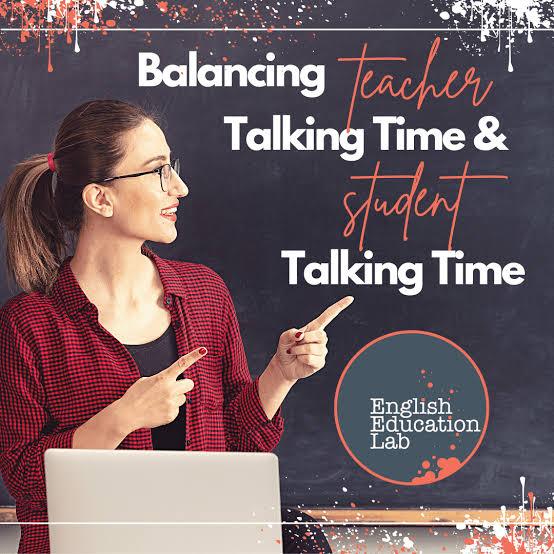
The traditional classroom has long been defined by the sound of a single, authoritative voice. For decades, the metric of a good teacher was often their ability to deliver a flawless, uninterrupted lecture, holding the attention of forty students through sheer oratorical skill. However, modern educational psychology has revealed a stark truth: when the teacher does all the talking, the students rarely do the learning. In contemporary pedagogy, the concept of Teacher Talk Time (TTT) versus Student-Centered Interaction (SCI) has emerged as a critical battleground for engagement and retention. Achieving the perfect equilibrium between these two forces is not merely a matter of classroom management; it is a fundamental shift from a model of information transmission to one of active knowledge construction. The challenge for the modern educator is to embrace the concept of the “silent classroom”—not a space devoid of sound, but one where the teacher willingly steps back to allow the vibrant chorus of student inquiry to take center stage.
To understand the necessity of this balance, one must first examine the inherent limitations of excessive Teacher Talk Time. When a teacher dominates the linguistic space of a classroom, students are relegated to the role of passive consumers. They become professional note-takers, listening for keywords and memorizing facts without necessarily digesting the underlying concepts. Cognitive science demonstrates that working memory has strict limits; a continuous stream of teacher-led explanation quickly leads to cognitive overload. Furthermore, high TTT reduces the opportunities for formative assessment. If the educator is speaking, they cannot listen to the misconceptions, breakthroughs, or struggles of their learners. While direct instruction is undeniably valuable for introducing entirely new frameworks or safety protocols, its overuse breeds compliance rather than curiosity, conditioning students to wait for answers rather than seek them.
Conversely, student-centered interaction flips the traditional hierarchy, transforming the classroom into a dynamic laboratory of discourse. When students speak, they are forced to organize their thoughts, defend their logic, and translate abstract concepts into their own vernacular. Whether through peer-to-peer debates, think-pair-share routines, or collaborative problem-solving, SCI fosters the development of higher-order thinking skills as outlined in Bloom’s Taxonomy. In these environments, language serves as the primary tool for learning. By articulating their understanding to a classmate, a student actively bridges the gap between what they think they know and what they can actually explain. Moreover, a student-centered approach accommodates diverse learning styles and cultural backgrounds, giving quieter or less confident students smaller, safer forums—such as pairs or triads—to voice their ideas before presenting them to the wider group.
However, transitioning to a student-centered model does not imply that the teacher becomes obsolete or entirely silent. The shift is best captured by the popular educational adage: moving from the “sage on the stage” to the “guide on the side.” The teacher’s role evolves from a primary source of information to a master architect of learning experiences. Reducing TTT requires meticulous planning. An effective educator designs targeted prompts, scaffolds complex tasks, and establishes clear norms for academic discussion. During periods of student interaction, the teacher remains highly active, moving around the room, eavesdropping on conversations, diagnosing gaps in understanding, and offering micro-interventions. The “silence” of the teacher is intentional and strategic; it is a deliberate withholding of the answer to create a vacuum that students feel compelled to fill.
Striking the ideal balance between TTT and student interaction is an art that depends heavily on the objectives of the lesson. A complete elimination of teacher talk is neither realistic nor desirable. Instead, educators should aim for a framework where TTT is highly optimized—clear, concise, and structured. For instance, a standard sixty-minute lesson might begin with a ten-minute burst of direct instruction to frame the objective and model a skill. This is followed by thirty-five minutes of structured student interaction, where learners grapple with the material in groups. The final fifteen minutes can be shared, allowing for student presentations and a brief teacher-led synthesis to solidify core takeaways. In this model, the teacher’s voice acts as the bookends of the lesson, providing the necessary structure while leaving the core interior open for student exploration.
Ultimately, the true measure of a successful classroom is not what the teacher puts into the environment, but what the students take out of it. By mindfully reducing Teacher Talk Time and elevating Student-Centered Interaction, educators create a democratic space where learning becomes a social, active, and deeply memorable process. The silent classroom is not an empty or eerie space; it is a profoundly respectful one. It is a classroom where the teacher’s silence signals a profound trust in the students’ capabilities, inviting them to step out of the shadows of passivity and into the light of ownership over their own education.
- Allow post comments