

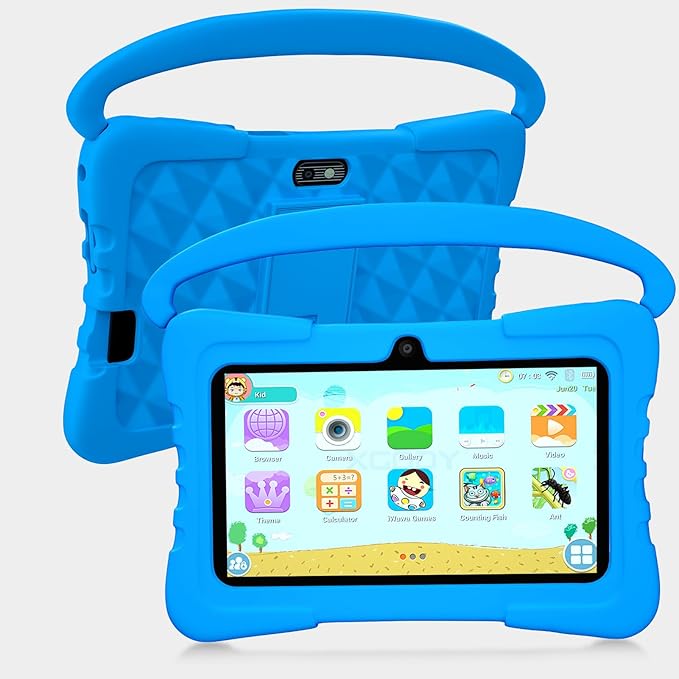
The modern classroom is undergoing a tectonic shift, moving away from static textbooks toward dynamic, digital environments. As we look toward 2026 and beyond, the debate over the optimal classroom device has intensified, centering on a fundamental question of form factor: Should schools invest in “Big iPads” (large tablets, 11-13 inches) or “Mini Gadgets” (handheld devices, smartphones, or 7-8 inch tablets)? The answer is not merely about screen real estate; it is a strategic decision that affects student engagement, digital literacy, and pedagogical methods. While large tablets offer unparalleled, desktop-like creation capabilities, mini gadgets provide ultimate portability, immediacy, and a more intuitive fit for a generation accustomed to “micro-learning.”
The Case for Big iPads: Immersive Creation and Professionalism
Large tablets, such as the iPad Pro or iPad Air, have bridged the gap between consumption and creation. As of 2025-2026, these devices are increasingly paired with powerful styluses (Apple Pencil) and multifunctional cases (ZUGU) to act as hybrid laptop replacements.
The primary advantage of a larger screen is its ability to foster high-level, “deep” learning. For tasks such as digital art, video editing, data analysis, or complex writing, a larger display is essential. It enables split-screen multitasking, allowing students to have a digital textbook on one side and a note-taking application on the other, increasing efficiency. Furthermore, research suggests that larger tablets reduce the cognitive load compared to smaller devices, as students do not have to zoom in and out to read complex diagrams, which can hinder information transfer.
In professional development and creative fields, large tablets are standard, preparing students for the 2026 technology-driven workforce, which increasingly relies on touch-enabled, high-performance computing. They are superior as “research companions,” transforming the Notes app into a powerful tool for thinking rather than just writing.
The Case for Mini Gadgets: Portability, Immediacy, and Focus
Conversely, the “Mini Gadget” camp champions smaller devices, including refreshed, more powerful iPad Minis and even high-functionality smartphones. These devices offer unparalleled mobility, making them ideal for agile learning environments, field trips, or quick, interactive check-ins during a lesson.
A major advantage of smaller gadgets is their “instant-on” nature, facilitating their use in shorter, 10-minute bursts without start-up delays. They are more easily handled by younger children, promoting better fine motor interaction. Furthermore, a 2021 study indicated that smaller screen display sizes might actually produce a lower cognitive load for certain types of tasks, making them superior for quick informational consumption rather than long-form creation.
Mini gadgets align with the “micro-learning” trend, where information is delivered in small, focused nuggets. In a world where attention spans are increasingly fragmented, smaller devices can feel less overwhelming and more “everyday-use” friendly. They are ideal for “quick scan” research, augmented reality (AR) apps that require holding the device up, or simple data collection during science labs.
Pedagogical and Cognitive Considerations
The decision between big and small often boils down to the intended pedagogy. If the goal is creation and deep work, big is better. If the goal is interaction, mobility, and immediate access to information, mini gadgets thrive.
However, both forms face significant challenges. Overuse of tablets is linked to concentration difficulties and attention deficits. A major concern is the “digital divide,” where high-end “Big iPads” may be unaffordable for lower-income districts, marginalizing students. Moreover, some educators are pushing back against screen saturation, with studies showing that students often read and comprehend faster with physical books.
As of 2026, technology is shifting towards adaptive tools—wearable AI assistants and smart glasses—that may make the traditional tablet debate secondary. However, in the immediate future of physical classrooms, the decision remains critical.
The Emerging Future: Hybrid and Adaptive Tech
Looking at 2026 trends, the most promising direction is not choosing one over the other, but rather adopting “flexible technology.” Rollable displays and tri-fold, creaseless tablets (Samsung Galaxy Z TriFold) are emerging that offer the portability of a mini gadget with the screen space of a large tablet when extended.
Additionally, the integration of AI is changing the value proposition. Rather than just being a display, the “Next Gen” tablet acts as a “coach,” with AI-based headphones and smart audio providing a more immersive, adaptive learning experience.
Conclusion
“What Next” in the classroom is not a binary choice, but a nuanced selection tailored to the educational context. Big iPads represent the future of digital creation, providing the necessary space for complex projects and deep research. Mini gadgets represent the future of agile learning, offering mobility and quick engagement.
While large tablets are superior for high schoolers and college students engaged in producing content, smaller gadgets are often more practical for primary and middle school, as well as field-based subjects. The ideal classroom of 2026 will likely employ a hybrid approach: using mini gadgets for quick, daily interactions and utilizing larger, flexible, or rollable tablets for immersive, creative, and long-form studies. The ultimate success lies not in the size of the screen, but in ensuring the technology enhances, rather than distracts from, the core pedagogical goals.