Online learning is no longer a temporary alternative to the physical classroom. It is a permanent shift in global education. However, technology does not exist in a vacuum. It is deeply shaped by social structures, cultural values, and economic realities. The future of online learning will not just be defined by faster internet or advanced artificial intelligence. Instead, it will be shaped by how digital tools adapt to diverse human societies. To understand where education is going, we must look at online learning through a sociocultural lens. This perspective reveals how digital classrooms intersect with cultural identity, community, and social equity.
Redefining Community and Cultural Identity
Historically, education was tied to a physical place. Students absorbed the cultural norms, language, and social values of their local community. Online learning removes these geographical boundaries. The future digital classroom will be a global melting pot. A student in Cairo can easily collaborate on a project with peers in Tokyo and Bogotá.
This global connectivity offers an incredible opportunity for cross-cultural empathy. However, it also brings the risk of cultural homogenization. Historically, global digital platforms have favored Western educational frameworks, teaching styles, and the English language.
The future of online learning depends on moving away from this one-size-fits-all model. To thrive, digital platforms must adopt culturally responsive pedagogy. This means creating learning management systems that support local languages, respect regional communication styles, and value diverse ways of knowing. Tomorrow’s online learning must celebrate local identities rather than erasing them in favor of a standardized global curriculum.
Bridging and Deepening the Digital Divide
The future of online learning is also tied to social equity. The digital divide is often viewed as a simple problem of hardware—a lack of laptops or Wi-Fi. In reality, it is a complex social issue. True digital equity requires not just access to technology, but also digital literacy, a quiet space to study, and social support.
In many developing regions and marginalized communities, social expectations can conflict with online education. For example, students may be expected to prioritize family businesses, agricultural work, or caregiving over synchronous online lectures.
Furthermore, economic inequality changes how students experience digital spaces. A wealthy student might learn from an immersive virtual reality headset in a private study room. A low-income student might have to watch recorded lectures on a shared smartphone with a spotty cellular connection.
The future of online learning must address these systemic gaps. Educators and developers must design “low-bandwidth, high-impact” educational tools. Education must remain accessible to those without high-speed fiber internet. Without intentional, equity-focused design, online learning risks worsening existing social inequalities instead of fixing them.
The Shift in Teacher-Student Dynamics
Culturally, the relationship between teachers and students varies wildly around the world. Some cultures view the teacher as an absolute authority figure. Others see the educator as a guide or facilitator. Online learning fundamentally alters these power dynamics.
AI-driven personalized learning paths and automated grading shift the teacher’s role. Educators are moving away from being the sole source of knowledge. Instead, they are becoming facilitators of digital navigation and critical thinking.
This shift can cause cultural friction. In societies that highly value hierarchy and face-to-face mentorship, fully asynchronous online learning can feel isolating and disrespectful. Conversely, in more individualistic societies, students often embrace the autonomy of self-paced online modules.
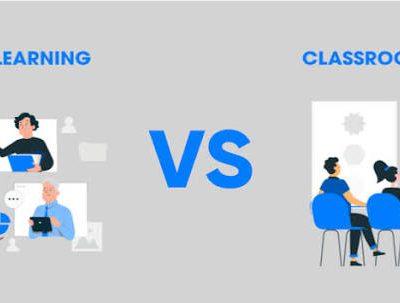
The future will likely favor a hybrid approach. Blended learning models will combine the flexibility of digital platforms with the culturally vital human connection of local mentorship. This ensures that the social emotional learning inherent in human interaction is not lost to automation.
Conclusion
The future of online learning is not a purely technical journey. It is a deeply social and cultural evolution. Digital education has the power to democratize knowledge, connect diverse minds, and offer unprecedented flexibility. Yet, its success depends entirely on our ability to navigate the complex social contexts in which students live.
As we build the educational tools of tomorrow, we must prioritize cultural diversity, social equity, and human connection. Only by grounding technology in sociocultural reality can we create a future where online learning truly serves all of humanity.
- Allow post comments