Introduction
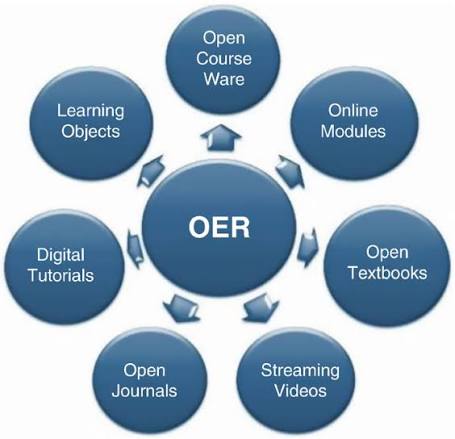
The shift toward distance education has fundamentally challenged the traditional, textbook-reliant language classroom. For decades, commercial textbooks served as the definitive roadmap for syntax, vocabulary, and cultural instruction. However, in an online environment, these static resources often feel rigid, rapidly outdated, and financially prohibitive. The physical isolation of distance learning demands instructional materials that are dynamic, interactive, and easily accessible. Enter Open Educational Resources (OER)—digitally accessible, openly licensed text, media, and assets used for teaching and learning. Utilizing OER in distance language learning goes far beyond replacing a physical book with a PDF. It democratizes access, invites authentic cultural immersion, and empowers educators to curate highly responsive, personalized learning pathways.
Democratizing Access and Eliminating Financial Barriers
The most immediate benefit of OER in distance language learning is the elimination of financial barriers. Traditional language textbook packages—which frequently bundle a student edition, a digital workbook code, and multimedia access—can cost hundreds of dollars per semester. For distance learners, who may already face disparities in technology, hardware, or reliable internet access, these costs can be a barrier to entry.
OER operates under Creative Commons licenses, ensuring that high-quality language materials are free to download, distribute, and retain from day one. This instant accessibility ensures legal and logistical equity. In a distance format, where students cannot easily share physical copies or browse library reserves, having immediate, permanent digital access to learning modules reduces friction. It ensures that the very first week of a remote course is spent learning the target language, rather than waiting for financial aid or shipping deliveries.
Authentic Cultural Immersion and Currency
Language is a living, breathing entity that evolves alongside culture. Commercial textbooks often take years to develop, publish, and distribute, meaning their cultural references, colloquialisms, and societal contexts are frequently outdated by the time they reach a student’s screen. This lag is especially problematic in distance learning, where students lack the organic, real-world cultural immersion that happens on a physical campus.
OER allows educators to bridge this gap by integrating authentic, real-time cultural materials into the curriculum. Because OER can be legally modified, adapted, and remixed, teachers can anchor language lessons in live public media, open-access journalism, regional podcasts, or open-licensed digital archives from target-language countries. A lesson on French subjunctive verbs, for example, can be taught using a trending open-source news article from West Africa rather than a fictional dialogue written in a printing press a decade ago. This agility connects remote learners to the genuine, contemporary pulse of the language they are studying.
Customization and Differentiated Learning Pathways
Distance learning environments host highly diverse student populations with varied proficiencies, learning paces, and professional goals. A static, linear textbook forces every student down the exact same path, regardless of their individual needs. OER, by contrast, gives educators the pedagogical autonomy to slice, dice, and tailor content.
Through the “5 Rs” of openness—the right to retain, reuse, revise, remix, and redistribute—instructors can build bespoke digital workbooks. If a remote student struggles with German case endings but excels at vocabulary, the instructor can seamlessly embed extra open-source interactive modules, H5P audio drills, and targeted grammar videos directly into the learning management system. Furthermore, OER allows for localized specialization. An instructor teaching Spanish for Healthcare professionals can strip away irrelevant chapters of a generic textbook and remix open medical glossaries, bilingual patient scripts, and case studies to create a highly specialized, career-ready curriculum.
Fostering Digital Agency and Open Pedagogy
Utilizing OER also transforms the role of the distance learner from a passive consumer of content into an active creator of knowledge—a framework known as Open Pedagogy. In a traditional remote course, student work often begins and ends in a closed digital drop-box, read only by the instructor. Open pedagogy leverages OER to make assignments meaningful beyond the classroom boundaries.
In a distance language course, students can contribute directly to the OER ecosystem as part of their coursework. For instance, advanced students can write, edit, or translate open-access Wikipedia articles into the target language. They can collaborate on public digital travel guides, record open-licensed pronunciation audio banks for future learners, or co-create bilingual community resource directories. This active contribution combats the isolation inherent in distance learning. It gives remote students a profound sense of agency, connecting their linguistic development to a tangible, global community of practice.
Conclusion
Transitioning beyond the textbook is no longer just an innovative choice; it is an instructional necessity for effective distance language learning. Open Educational Resources dismantle the economic barriers that restrict education, while offering a level of cultural currency and structural flexibility that traditional publishing cannot match. By transforming the remote classroom into a space driven by authentic media, tailored pathways, and collaborative creation, OER ensures that distance is never a barrier to fluency. In the digital frontier of education, open resources do not just teach a language—they invite students to actively participate in the global community that speaks it.
- Allow post comments