The journey of acquiring a second language is rarely a linear path of flawless progression; rather, it is a complex terrain marked by continuous trial, error, and adjustment. In the field of English as a Second Language (ESL) education, student errors were historically viewed as failures in learning or negative habits requiring immediate eradication. However, modern applied linguistics and pedagogical frameworks offer a more constructive perspective. Through the systematic implementation of Error Analysis (EA), educators can reframe student mistakes not as indicators of failure, but as critical milestones and diagnostic windows into the learner’s developing linguistic system. By systematically identifying, classifying, and addressing grammatical and structural deviations, EA empowers both teachers and students, transforming the ESL writing classroom into a dynamic laboratory for linguistic growth.
To understand the value of Error Analysis, one must first recognize what an error represents. Linguist Pit Corder fundamentally altered language pedagogy by distinguishing between “lapses” (accidental slips of the tongue or pen due to fatigue or carelessness) and “errors” (systematic deviations that reveal a gap in the learner’s current knowledge). When an ESL writer consistently omits articles, misapplies verb tenses, or misplaces adjectives, they are not merely making random guesses. Instead, they are operating under a temporary, highly individualized grammatical framework known as interlanguage. An error is tangible proof that the student is actively testing hypotheses about how English works. Implementing EA allows educators to decode this interlanguage, uncovering whether a mistake stems from first-language (L1) interference, overgeneralization of English rules, or incomplete application of a newly taught structural concept.
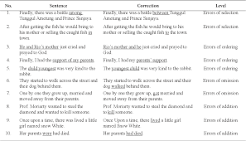
The practical implementation of Error Analysis in the ESL writing classroom requires a structured, multi-step approach. The process begins with identification, where the instructor isolates deviations within a piece of student writing. Next comes classification, where errors are categorized into distinct linguistic domains, such as syntax, morphology, lexicon, or mechanics. For instance, a teacher might group errors into subcategories like subject-verb agreement, incorrect prepositions, or direct translations from the student’s native language. Once categorized, the teacher conducts an explanation phase, determining the psychological or linguistic root cause of the error. The final and most crucial step is remediation, where this gathered data directly informs targeted instructional interventions, moving away from generic grammar lectures and toward the specific structural vulnerabilities of the classroom.
For students, the integration of EA into the writing process fosters a profound psychological shift. Traditional red-ink corrections often induce language anxiety, leading students to become passive recipients of feedback who fixate on grades rather than linguistic mechanics. When teachers employ EA, they can transition from exhaustive, demoralizing proofreading to selective error correction. By focusing feedback on one or two systematic error types per assignment, educators prevent cognitive overload. Furthermore, students can be trained to perform self-directed error analysis using personalized tracking sheets. When an ESL learner actively logs their errors over multiple drafts, they begin to spot patterns in their own writing. This shifts their self-perception from that of a “bad writer” to an active analytical thinker tracking tangible milestones as their frequency of systematic errors decreases.
Moreover, Error Analysis serves as an invaluable diagnostic tool for curriculum design and differentiated instruction. When aggregated across an entire class, EA data reveals widespread conceptual blind spots. If a narrative writing assignment yields an overwhelming number of past-tense errors across the cohort, the instructor receives an immediate, data-driven signal to pause the syllabus and conduct a targeted mini-lesson. Conversely, for individualized learning, EA allows teachers to provide tailored grammar matrices. A student struggling with L1 syntax interference receives different developmental exercises than a student struggling with vocabulary collocations. This targeted approach maximizes instructional efficiency, ensuring that classroom time is directly aligned with the actual linguistic needs of the learners.
Despite its clear benefits, implementing EA is not without challenges. It requires a significant investment of time from educators, who must analyze writing samples with a diagnostic eye rather than simply marking sentences as correct or incorrect. Additionally, overemphasizing error analysis risks making students overly cautious, potentially stifling their fluency, creative expression, and willingness to experiment with complex sentence structures. To mitigate this, educators must balance error analysis with holistic praise, ensuring that feedback celebrates rich vocabulary choice and strong argumentative structure alongside grammatical precision.
Ultimately, embracing Error Analysis redefines the narrative of the ESL writing classroom. Mistakes are no longer stigmatized obstacles to success; they are celebrated as the literal scaffolding of fluency. By converting raw data from student errors into actionable pedagogical milestones, educators demystify the mechanics of the English language. This methodology equips ESL writers with the metacognitive tools necessary to self-correct, take ownership of their linguistic evolution, and confidently transform their academic writing from a minefield of mistakes into a series of triumphant milestones.
- Allow post comments